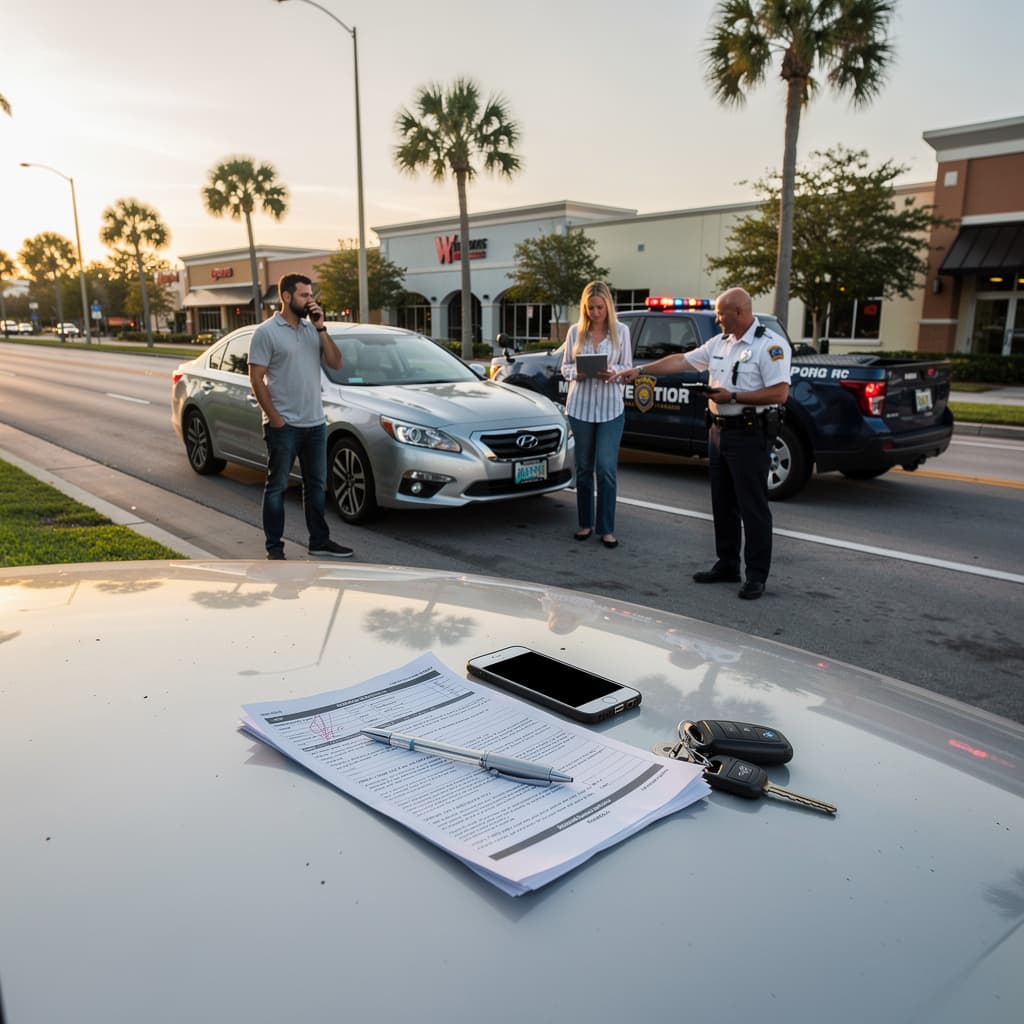
If you are looking for car accident claim help in Florida, the most important first steps are to ensure everyone is safe, report the crash to law enforcement, and notify your insurance company. Florida operates under a no-fault insurance system, which means your own personal injury protection (PIP) coverage typically pays for your initial medical bills and lost wages after a collision, regardless of who caused the crash. CaseClosedFL is not a law firm and does not provide legal advice, but we can help you understand the process and connect with an attorney through our secure intake and attorney-matching service.[2][3]
Immediate Steps After a Florida Car Accident
Immediately following a collision, Florida law requires you to stop and remain at the scene. If the crash involves injuries, death, or property damage that appears to exceed a certain threshold, you must call local police or the Florida Highway Patrol to file an official report. The Florida Department of Highway Safety and Motor Vehicles (FLHSMV) provides resources for drivers involved in crashes, including guidance on how to obtain the official crash report once it is filed by the responding officer.[4][1]
- Check for injuries and call 911 if medical attention is needed.
- Move vehicles out of traffic if it is safe to do so.
- Exchange names, contact information, and insurance details with the other driver.
- Take photos of the scene, vehicle damage, and any visible injuries.
- Request a copy of the official police report through the Florida Crash Portal.
Understanding Florida's No-Fault Insurance Rules
Florida's Motor Vehicle No-Fault Law requires drivers to maintain security for personal injury protection (PIP). Under Florida Statute 627.7407, any person subject to these requirements must maintain PIP coverage as mandated by state law. This means that after an accident, your own insurance company handles your initial medical expenses and lost wages up to your policy limits, regardless of who was at fault for the collision.[3][2]
Because Florida is a no-fault state, you typically cannot sue an at-fault driver directly unless your injuries meet a certain threshold or your expenses exceed your PIP coverage. The specifics of your insurance policy and the facts of your crash will determine what options are available to you. For accurate guidance on your specific situation, consider speaking with a qualified attorney.[3]
How to Obtain Your Florida Crash Report
Official crash reports in Florida are filed by law enforcement and are available through the Florida Crash Portal. According to FLHSMV, crash reports that reveal personal information about the parties involved are confidential and exempt from public disclosure under Florida Statute 316.066. Access is limited to the parties involved in the crash, their legal representatives, their licensed insurance agents, and their insurers.[7][1]
Filing a Claim Against a State Vehicle
If your accident involved a vehicle operated by a state employee, agent, or volunteer, the process is different. The Florida Department of Financial Services manages these automobile liability claims under the state's waiver of sovereign immunity. Claimants must put the state agency and the Division of Financial Services on notice of their claim in writing within three years of the occurrence. A 180-day investigation period applies before a lawsuit can be filed, and tort recoveries are generally limited to $200,000 per person and $300,000 per occurrence.[5]
Working With an Attorney After a Crash
While many minor accident claims are resolved through insurance, more complex cases may benefit from legal representation. An attorney can help you understand your rights, negotiate with insurance adjusters, and determine whether your injuries meet the threshold to step outside the no-fault system. If you are unsure whether you need an attorney, CaseClosedFL offers a free eligibility screening to help you understand your options before making any decisions.[3]
How CaseClosedFL Can Help
Navigating the aftermath of a collision can be overwhelming. CaseClosedFL provides accident case acquisition, screening, and secure intake services for individuals in Florida, California, Arizona, Texas, and New York. While we do not offer legal advice or guarantee a specific case value, recovery, or attorney match, our platform is designed to help you understand your options and connect with a legal professional if your case qualifies. You can start with our free eligibility screening to see where you stand.
Frequently asked questions
Is Florida a no-fault state for car accidents?
Yes. Florida operates under a no-fault insurance system, meaning your personal injury protection (PIP) coverage pays for your initial medical bills and lost wages after a crash, regardless of who was at fault.[3][2]
How do I get my Florida crash report?
You can purchase or access your official Florida crash report through the Florida Crash Portal. Access to reports containing personal information is restricted to involved parties, their legal representatives, and their insurance agents.[7][1]
What if my accident was caused by a state vehicle?
Claims against a state vehicle are handled by the Florida Department of Financial Services. You must provide written notice of your claim within three years of the accident, and a 180-day investigation period applies before a lawsuit can be filed.[5]
Can CaseClosedFL give me legal advice for my Florida accident?
No. CaseClosedFL is not a law firm and does not provide legal advice or representation. We provide secure intake, eligibility screening, and attorney-matching services for accident victims in Florida and several other states.