U.S. Car Accident: Check Eligibility Before Seeing a Chiropractor
Injured in a U.S. car accident? Run a free eligibility check first. A privacy focused intake with human review can protect your legal claim.


If you were hurt in a car accident, the fastest way to protect your claim is to run a free eligibility check right away, not wait and see. Most injury claims benefit from an early review, since evidence and treatment records fade fast and statutes of limitations keep running. CaseClosedFL offers a privacy-first intake that covers Florida, California, Arizona, Texas, and New York, and attorneys typically work on contingency, so a check costs nothing upfront.
TL;DR:
- Filing a free eligibility check immediately after a crash helps preserve evidence and aligns with strict statutes of limitations that can end your right to sue within one to six years.
- The intake process filters cases to those with a higher chance of success, with a human review step to avoid unwanted solicitation and ensure accurate case matching.
- Choosing a chiropractor with experience in accident injuries and proper documentation practices can help support your claim and prevent claim weakening through irregular or vague notes.
- Chiropractic treatment costs depend on insurance coverage, with many states offering auto PIP coverage or treatment under a letter of protection, which must be settled in your case to prevent unpaid bills.
- Acting promptly and securing legal help on a contingency basis can ensure medical liens are managed and claims are settled efficiently, often within months before a jury trial becomes necessary.
Table of Contents
- Chiropractor After Car Accident: What It Actually Means for Your Claim
- Your Options After a Car Accident: A Quick Comparison
- How to Choose the Right Chiropractor After a Car Accident
- What Chiropractic Care After a Crash Typically Costs
- Start Your Free Eligibility Check With CaseClosedFL
- A Straight Answer About Timing and Trust
- Where to Learn More Before You Decide
- Sources
Chiropractor After Car Accident: What It Actually Means for Your Claim
When people search “chiropractor after car accident,” they are usually trying to figure out whether their injury and treatment history are enough to justify legal help, not just medical care. That distinction matters for this guide. The real question isn’t which chiropractor to see. It’s whether your accident, your injuries, and your current situation qualify you for a personal-injury claim, and how to get that answered without wasting time or money.
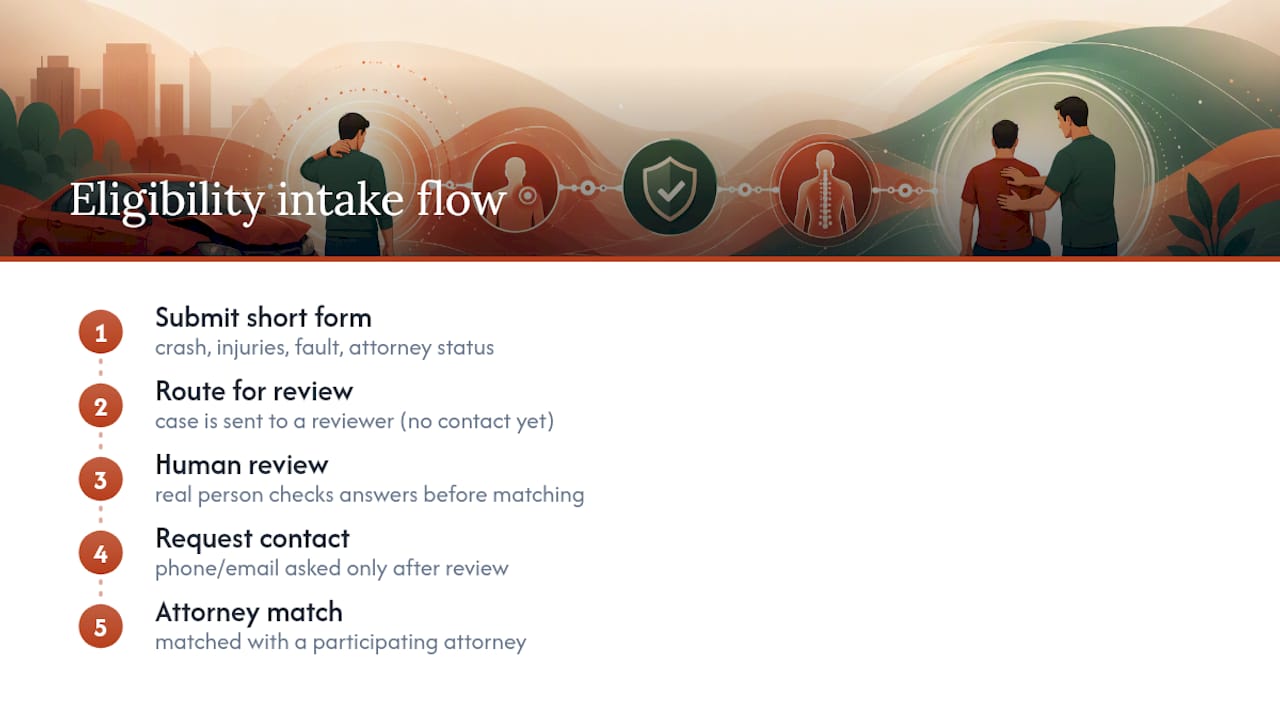
An eligibility intake exists to answer exactly that. A short form asks about the crash, your injuries, fault, and whether you already have an attorney, then routes your case to a person for review before anyone requests your phone number or email. That sequencing is deliberate. CaseClosedFL’s intake is built to reduce unwanted solicitation, and the human review step means a real person looks at your answers before you’re matched with a participating attorney.
Speed matters here for a specific reason. State statutes of limitations for personal-injury claims range from one year to six years depending on where the crash happened, and missing that window can end your right to sue entirely. Confirm your state’s deadline early, and treat a free consultation as a starting point, not a delay tactic.
Your Options After a Car Accident: A Quick Comparison
Once you know you were injured and someone else may be at fault, you have four realistic paths forward. Each fits a different situation, and none of them cost anything to explore.
- CaseClosedFL eligibility intake: A short online form gathers injury, fault, and representation details before requesting contact information, then a human reviews your answers and matches qualifying cases to a participating attorney. Best for people who want a fast, low-pressure first step across Florida, California, Arizona, Texas, or New York.
- Direct contact with a local personal-injury attorney: Best when your injuries are severe, the case is complex, or you already have a firm in mind. Local attorneys know the courts and adjusters in your area.
- State bar referral service: Most state bar associations run a neutral lawyer-referral line. Useful if you want a vetted local list without committing to any single firm.
- Hospital or victim-advocate referral: Many hospitals connect seriously injured patients with legal or social-work advocates on-site, which can help when you’re still receiving acute care.
The intake route and the direct-attorney route usually move fastest, since both skip the extra step of a referral list. If your case is straightforward, a screened match can put you in front of the right attorney within days.
How to Choose the Right Chiropractor After a Car Accident
If your treatment plan includes chiropractic care, the provider you choose can affect both your recovery and your claim’s documentation. Look for someone who treats accident injuries regularly, not just general back pain, and who understands how to write reports insurance adjusters and attorneys can actually use.
Ask direct questions before your first visit. Does the office bill through health insurance, personal-injury protection, or a letter of protection? Will the chiropractor coordinate with your primary doctor or attorney if needed? How often will they document your progress in writing?
Red flags are worth naming plainly. Be cautious of any provider who guarantees a settlement amount, pressures you into a long treatment package before an exam, or can’t explain how their billing works. Continuous, well-documented care strengthens an injury claim; sporadic visits with vague notes tend to weaken it. Consistency and paperwork matter more than the office’s location or décor.
What Chiropractic Care After a Crash Typically Costs
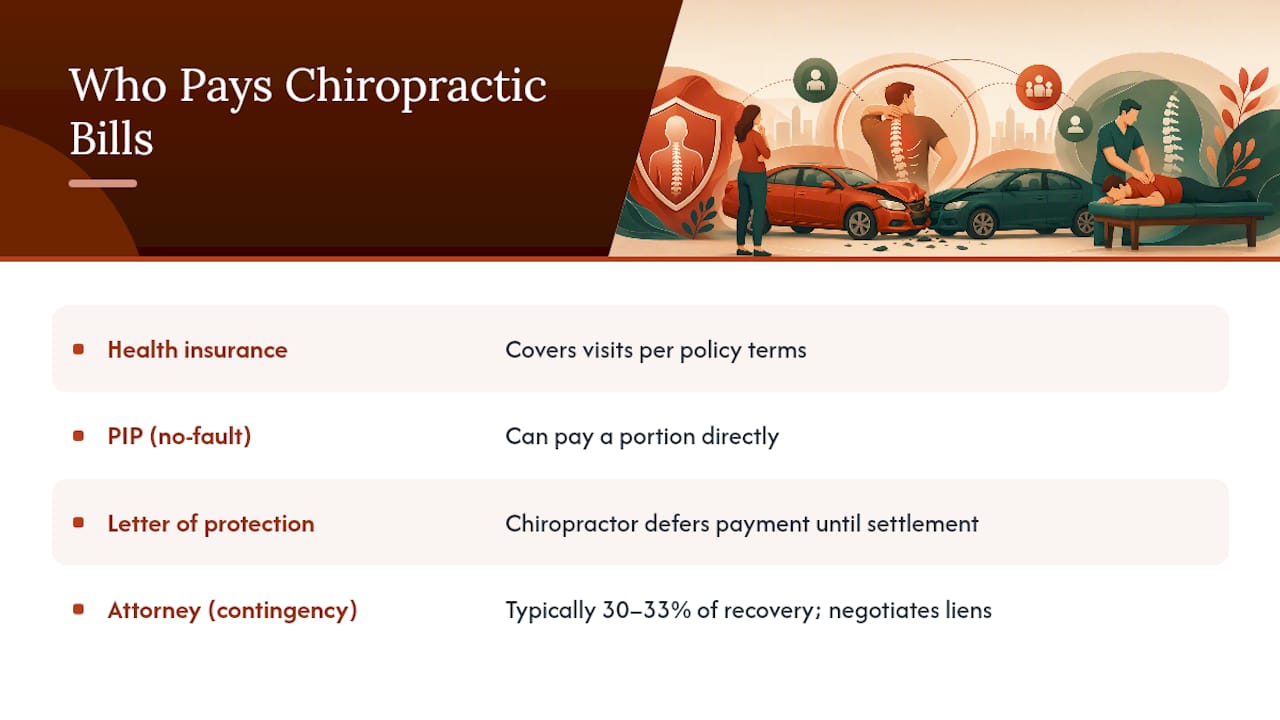
Chiropractic visits after a car accident generally run in the same range as any specialist office visit, though exact pricing depends heavily on your state, your insurance, and whether you’re using health insurance, auto Personal Injury Protection (PIP), or a letter of protection against a future settlement.
Florida and several other no-fault states require PIP coverage that can pay a portion of chiropractic bills directly, regardless of who caused the crash. Where PIP doesn’t apply or runs out, some chiropractors will treat under a letter of protection, deferring payment until your case resolves. That arrangement can be useful, but it also means your final settlement needs to cover those bills before you see any money.
This is exactly where legal help earns its cost. An attorney working on contingency, typically around 30 to 33 percent of the recovery, can negotiate medical liens and make sure treatment costs are accounted for in any settlement, rather than left for you to sort out afterward. Get the fee agreement, and who pays case costs, in writing before you sign anything.
Start Your Free Eligibility Check With CaseClosedFL
CaseClosedFL’s intake asks about your accident, injuries, fault, and current representation status before ever requesting your contact information, and every submission gets a human review before it’s matched to a participating attorney.
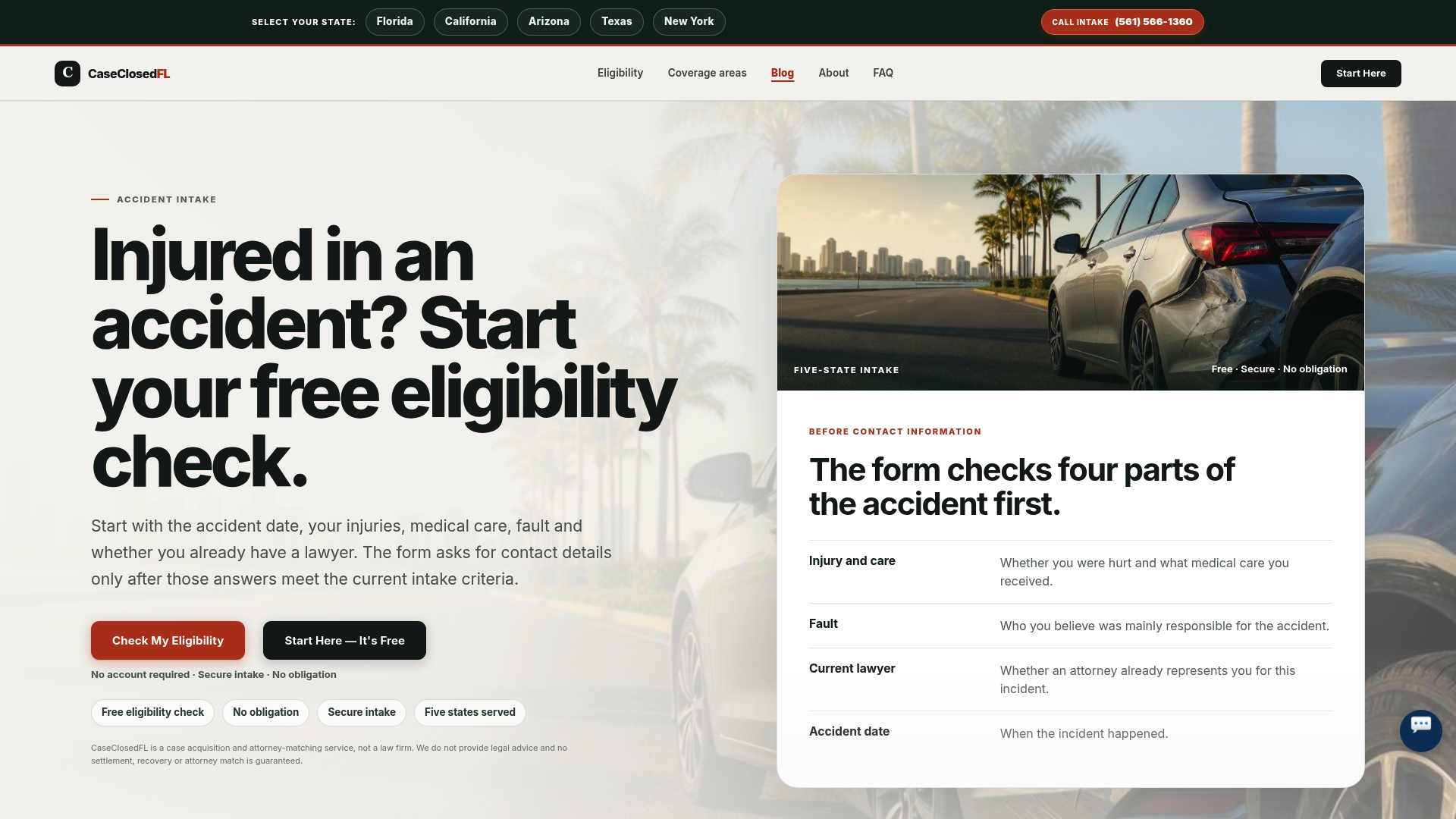
Once you submit the form, there’s no cold-call barrage waiting for you. If your case looks eligible, a reviewer matches it to an attorney in your state, and that attorney’s office reaches out to schedule your free consultation. If it doesn’t look like a fit, you’re told that too, without pressure to keep going. The platform currently covers multiple states, so wherever your crash happened in those areas, there’s a direct path to check.
The best place to start depends on where you are. National readers can begin at the main CaseClosedFL intake. Drivers hurt in a Miami-area crash can use the Miami car-accident case review, which factors in local case-value considerations. South Florida residents closer to Broward County can use the Fort Lauderdale case review instead. Arizona residents have their own dedicated Arizona intake built around that state’s rules. Whichever page fits your location, the form takes a few minutes, and there’s no obligation to move forward after you see your results.
A Straight Answer About Timing and Trust
Most people wait too long after a crash, hoping the pain settles down or the other driver’s insurer calls first. Neither usually happens on your timeline. The gap between the accident and your first documented treatment or legal contact is exactly the gap insurance adjusters look for when they want to argue your injuries weren’t serious or weren’t caused by the crash.
Contingency fees exist so cost isn’t the reason you delay. You’re not paying an attorney by the hour to find out if you have a case. Most claims settle without ever reaching a jury, often within several months when liability is clear, so the fear of a drawn-out trial shouldn’t be what keeps you from making the call either.
This section reflects the editorial perspective of Luis, based on the legal and claims-process research cited throughout this article. Author credentials and case-specific insights will be added here.
— Luis
Where to Learn More Before You Decide
For deeper reading on attorney fees and vetting a lawyer, see Nolo’s guide on hiring a personal-injury lawyer, Forbes Advisor’s guide to finding a car-accident lawyer, and FindLaw’s settlement timeline overview. To start an intake, visit CaseClosedFL, the Miami car-accident page, the Fort Lauderdale page, or the Arizona intake.
This article is general information, not a substitute for advice from a qualified lawyer. Consult a qualified legal professional about your own circumstances before acting on anything here.
Sources
- What should I ask before hiring a personal injury lawyer? — Nolo
- Car accident settlement process and timeline — FindLaw
Recommended
Ready to enter the accident details?
The eligibility form asks about the accident, injury, treatment, fault and representation before contact information.
Start Eligibility Check